Overview

Note: ASL interpreters will be available throughout the workshop.

Accepted Papers: The accepted paper list is now available, including poster IDs and CVF Open Access links where available.

    Welcome to GenSign: The 1st Workshop on Generative AI for Sign Language at CVPR 2026!

    Recent advances in sequential generative models and diffusion-based approaches offer a promising pathway to produce high-quality translations, synthesize realistic and expressive digital signers, expand low-resource sign datasets, and foster more inclusive communication between deaf and hearing communities.

    This workshop brings together researchers from computer vision, natural language processing, linguistics, and accessibility studies to explore the frontiers of generative modeling for sign language and to foster responsible, human-centered AI systems that understand and communicate through this uniquely visual language. Specifically, we aim to:

    • Advance generative approaches for sign language understanding and generation, including high-quality translations, realistic and expressive digital signer synthesis, and expansion of low-resource sign datasets.
    • Leverage modern sequential and diffusion-based models to address realism, controllability, and data scarcity in low-resource sign language settings.
    • Promote responsible and inclusive AI systems that respect linguistic structure and meaningfully support deaf and hard-of-hearing communities.

Call for Papers

We welcome contributions covering all aspects of generative AI for sign language:

đŸ€Ÿ Advances in Sign Language Processing

  • Sign Language Production and Synthesis
  • Sign Language Recognition and Translation
  • Inclusive Technology and Real-world Impact

🧠 Human-centric Generative Foundation Models

  • Human-Centric Representation Learning
  • Human Motion & Gesture Synthesis
  • Personalization & Social Alignment

📊 Evaluation, Datasets and Benchmarks

  • Semantic and Human-centric Metrics
  • Large-Scale Benchmarking
  • Automatic Annotation Tools

đŸ€ Ethics, Inclusivity & Cultural Competence

  • Participatory Design in AI
  • Bias, Privacy and Data Sovereignty
  • Cultural and Linguistic Authenticity

Awards & Journal Recommendations

🏆 Best Paper Award: A best paper reward will be selected.

📚 Journal Recommendations: High-quality workshop papers will be recommended to the following journals:

Submission Track 1: Proceedings Track

Submissions must present original, unpublished research and follow the CVPR 2026 template.

  • Length: 5-8 pages (main text), excluding references and optional appendices
  • Review Process: Double-blind peer review via OpenReview, all manuscripts must be fully anonymized
  • Publication: Accepted papers will be published in workshop proceedings
  • Code & Data: Open-sourcing is encouraged but not mandatory
  • Presentation: All accepted papers are expected to be presented in person at the workshop

Important Dates (AoE)

  • Paper Submission Deadline: March 14, 2026
  • Author Notification: March 20, 2026
  • Camera Ready: April 10, 2026

Submission Track 2: Non-Proceedings Track

A flexible, non-archival track for sharing work without restrictive formatting or page limits.

  • Works-in-progress and preliminary results
  • Open datasets, technical reports, and recent submissions
  • Position papers and conceptual frameworks
  • Previously published work accepted

Important Dates (AoE)

  • Paper Submission Deadline: May 10, 2026
  • Author Notification: May 16, 2026
  • Camera Ready: May 26, 2026

Invited Speakers

We are honored to host distinguished academic and industry experts on generative AI for sign language.

Richard Bowden

Richard Bowden

University of Surrey & Signapse AI

Talk: AI Translation of Sign languages

Richard Bowden is Professor of Computer Vision and Machine Learning at the University of Surrey, UK, where he leads the Cognitive Vision Group within the Centre for Vision Speech and Signal Processing with several major grants focusing on the use for AI for sign language translation. He is also Co-founder and Chief Scientist of Signapse, a company that provides Ai translation of written language into sign language for BSL (British), ASL (American) and soon DGS (German). His research focuses on computer vision for human detection, tracking, and understanding. He is a Fellow of the Higher Education Academy, a Senior Member of the IEEE, a Fellow of the International Association of Pattern Recognition, and a Distinguished Fellow of the BMVA.

Colin Lea

Colin Lea

Apple

Talk: Toward Fluent Sign Language AI: Moving Beyond Glosses

Colin Lea is a research scientist and manager at Apple, where he works at the intersection of machine learning, HCI, and accessibility within Apple's Human-Centered ML group. His team develops technologies for users with varying speech, motor, or hearing abilities, including sign language recognition and video generation systems, as well as speech recognition for people with speech differences. His work has contributed to accessibility features such as Vocal Shortcuts, Sound Actions, Siri Pause Time, and Double Tap on Apple Watch. Previously, he worked at Facebook Reality Labs on multimodal avatar animation and VR telepresence, and he earned his PhD in Computer Science from Johns Hopkins University, where his research introduced Temporal Convolutional Networks for action segmentation and detection.

Karen Livescu

Karen Livescu

Toyota Technological Institute at Chicago

Talk: A few steps toward understanding sign language in the real world

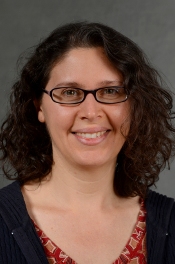
Karen Livescu is a Professor at TTI-Chicago. She also has a courtesy faculty appointment at the University of Chicago computer science department and is affiliated with its Data Science Institute. She completed her PhD in EECS at MIT, after a Bachelor's degree in physics at Princeton University. Her research group works on a broad variety of topics in spoken, written, and signed language processing, with a particular interest in representation learning, learning from multiple modalities, and low-resource settings. She is a Fellow of the IEEE and ISCA. She has served as a program chair/co-chair for Interspeech, ASRU, and ICLR and as an Associate Editor for journals such as TACL and IEEE T-PAMI.

Abraham Glasser

Abraham Glasser

Gallaudet University

Talk: Sign Language AI: Towards Authentic Accessibility Through Community Collaboration

Dr. Abraham Glasser is a faculty member in the Accessible Human-Centered Computing and Policy (AHCP) program at Gallaudet University, where he is also co-director of the Rehabilitation Engineering Research Center on Technology for the Deaf and Hard of Hearing (DHH RERC). He is also a member of the Coalition for Sign Language Equity in Technology (CoSET) and has contributed to published resources supporting standards work, e.g. for AI-based interpreting. Overall, he and his students conduct Human Computer Interaction (HCI) research involving AI, immersive technologies, and accessible computing for Deaf and Hard of Hearing users.

Workshop Schedule

The workshop will be held on June 3rd, 2026 in Room 112 (AM) at CVPR 2026 in Denver, Colorado.

Note: ASL interpreters will be available throughout the workshop.

TimeSessionSpeaker / Details
08:30 - 08:40WelcomeOpening Remarks by Organizers
08:40 - 09:20Keynote Presentations & QuestionsRichard Bowden
AI Translation of Sign languages
09:20 - 10:00Keynote Presentations & QuestionsColin Lea
Toward Fluent Sign Language AI: Moving Beyond Glosses
10:00 - 11:00Invited Poster Session & Coffee BreakPoster Session
11:00 - 11:40Keynote Presentations & QuestionsKaren Livescu
A few steps toward understanding sign language in the real world
11:40 - 12:20Keynote Presentations & QuestionsAbraham Glasser
Sign Language AI: Towards Authentic Accessibility Through Community Collaboration
12:20 - 12:30Closing RemarksClosing Remarks

Accepted Papers

Accepted papers for the GenSign workshop are listed below. We welcome attendees to visit the corresponding poster IDs during the poster session (June 3rd, 2026, 10:00 - 11:00) for discussion.

  1. Rui Hong, Jana Kosecka
    Poster 75Proceedings Track
  2. Guilhem Fauré, Mostafa SADEGHI, Sam Bigeard, Slim Ouni
    Poster 76Proceedings Track
  3. Active Learning for Fingerspelling Recognition with Temporal Inconsistency
    Junseok Kim, Hyunseo Lee, Jae Won Cho
    Poster 77Non-Proceedings Track
  4. Pedro Alejandro Dal Bianco, Jean Paul Nunes Reinhold, Oscar AgustĂ­n Stanchi, Facundo Manuel Quiroga, Franco Ronchetti, Ulisses Brisolara CorrĂȘa
    Poster 78Non-Proceedings Track
  5. Serpil Karabuklu, Kanishka Misra, Shester Gueuwou, Diane Brentari, Greg Shakhnarovich, Karen Livescu
    Poster 79Non-Proceedings Track
  6. Zeno Testa, Lorenzo Baraldi, Antonino Furnari, Natalia DĂ­az-RodrĂ­guez
    Poster 80Non-Proceedings Track
  7. Xiao Liu, Shiwei Gan, Yafeng Yin, Bowen Guo, Zhiwei Jiang, Shunmei Meng, Lei Xie, Sanglu Lu
    Poster 81Non-Proceedings Track
  8. Shiwei Gan, Xiao Liu, Yafeng Yin, Nan Liu, Kuizhuang Liu, Desibieer Tuerdaken, Zhiwei Jiang, Lei Xie, Sanglu Lu, Hongkai Wen
    Poster 82Non-Proceedings Track
  9. Zimu Zhang, Yucheng Zhang, Xiyan Xu, Ziyin Wang, Sirui Xu, Kai Zhou, Bing Zhou, chuan guo, Jian Wang, Yu-Xiong Wang, Liangyan Gui
    Poster 83Non-Proceedings Track
  10. Yichen Peng, Jyun-Ting Song, Siyeol Jung, Ruofan Liu, Haiyang Liu, Xuangeng Chu, Ruicong Liu, Erwin Wu, Hideki Koike, Kris Kitani
    Poster 84Non-Proceedings Track

Organizers

Our organizing team brings together expertise from computer vision, NLP, linguistics, and accessibility research across multiple continents.

Hezhen Hu

Hezhen Hu

University of Texas at Austin

Yuecong Min

Yuecong Min

Institute of Computing Technology, CAS

Ronglai Zuo

Ronglai Zuo

Imperial College London

Oscar Koller

Oscar Koller

Microsoft Research, Munich

Léore Bensabath

Léore Bensabath

École des Ponts ParisTech

Wengang Zhou

Wengang Zhou

University of Science and Technology of China

Houqiang Li

Houqiang Li

University of Science and Technology of China

Stefanos Zafeiriou

Stefanos Zafeiriou

Imperial College London & Google

Xilin Chen

Xilin Chen

Institute of Computing Technology, CAS

Hongdong Li

Hongdong Li

Australian National University

Dimitris N. Metaxas

Dimitris N. Metaxas

Rutgers University